
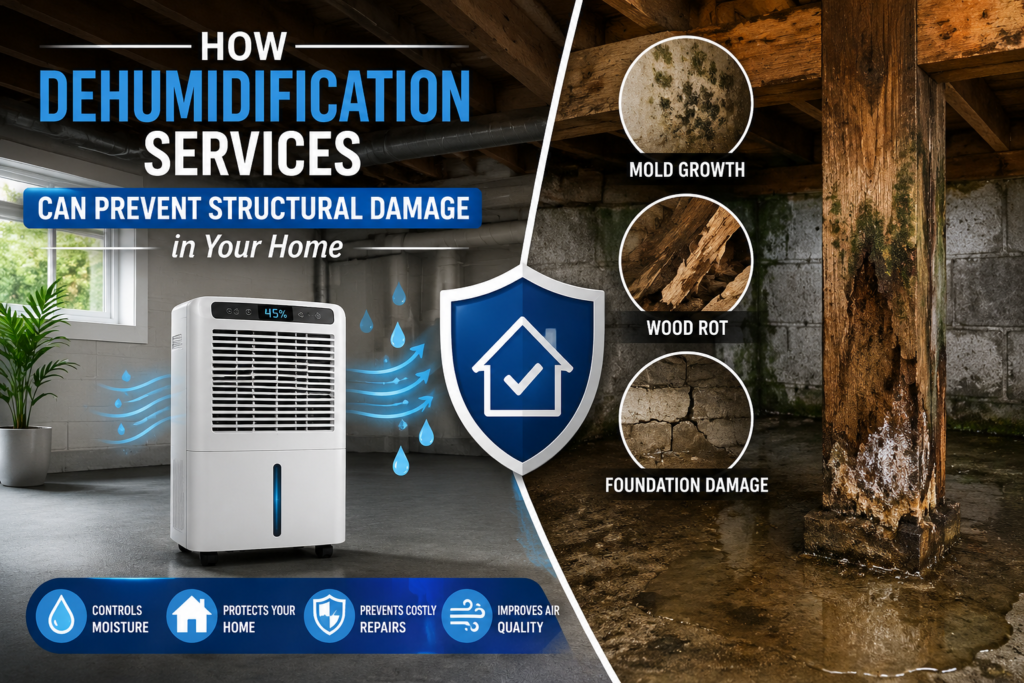
Dehumidification is the process of eliminating excess moisture from the air to reduce moisture levels. In the context of water damage, dehumidification plays an important role in regulating the drying setting and avoiding secondary damage, such as mold growth or rot.
Using a dehumidifier for water damage is one of the most effective ways to speed up the drying process and prevent long-term issues. EC Restoration Services’ influential machines don’t just remove standing water; they also extract excess moisture from the air, walls, floors, and furniture to create a healthier, drier environment.
The science of moisture and building materials
To understand why dehumidification is necessary, one must look at how common building materials interact with water vapor.
- Hygroscopic Materials: Wood and drywall are “hygroscopic,” meaning they naturally absorb moisture from the air. When they soak up too much water, they expand; when they dry, they contract.
- The Cycle of Stress: This constant expansion and contraction leads to “material fatigue.” Over time, this weakens the fibers of the wood and the integrity of the gypsum in your walls.
Preventing Wood Rot and the Sponge Effect
The skeleton of most homes is composed of timber. Whether it’s the floor joists in a crawlspace or the studs behind your living room walls, wood is highly susceptible to moisture-induced failure.
The primary forms of timber decay are wet rot and dry rot. Although both require moisture to develop, their behavior and level of risk differ significantly.
- Wet Rot: commonly caused by fungi, wet rot develops when timber moisture content exceeds approximately 50%. It typically occurs in areas exposed to persistent water saturation. Affected wood becomes darker in appearance and softer or spongy in texture.
- Dry Rot: Dry rot can initiate at lower moisture levels, around 20%. Its primary risk lies in its ability to spread beyond the original moisture source. It can travel through masonry, plaster, and brickwork to locate additional timber, continuing to cause structural damage even after the initial leak has been resolved.
Effective wood rot prevention begins at the timber selection stage. Selecting the appropriate species before applying any paint or sealant provides inherent resistance to fungal decay. This initial decision taken by the professionals establishes long-term durability and reduces future maintenance demands.
Protecting Masonry and Foundation Integrity
Masonry is more than just the decorative brick, stone, or block work that adds personality to a house. It is essential to the structural stability of your house. Homeowners must comprehend the function and significance of masonry since it affects the longevity, security, and general functionality of their house.
One of the most common threats to a home is water intrusion. Poorly installed or deteriorating masonry allows moisture to seep into walls, potentially leading to damage to both the masonry itself and adjacent building materials.
It’s a common misconception that concrete and brick are impervious to humidity. In reality, they are porous materials.
- Efflorescence: High humidity pulls salts out of concrete and brick, leaving a white, powdery residue. While aesthetic at first, this process (efflorescence) indicates that the internal structure of the masonry is being slowly leached of its binding minerals.
- Secondary Foundation Stress: In crawlspaces or basements, high humidity contributes to “hydrostatic pressure” changes in the soil surrounding the foundation. A professional-grade dehumidifier stabilized the internal air pressure and moisture gradient, preventing cracks from forming in the foundation walls.
The Role of Professional-Grade Equipment
- Excessive humidity in the air can lead to a range of problems that, if not properly managed, can compromise productivity and safety within an industrial facility.
- Industrial dehumidifiers are systems designed to remove excess moisture from the air, stabilizing relative humidity at optimal levels for the specific application.
- In the food and pharmaceutical industries, uncontrolled humidity can affect product consistency. EC Restoration Services offers dehumidifying the air, which reduces the risk of deterioration and ensures storage and processing conditions.
- A dehumidifier helps create an environment that is healthy and prevents mold growth. It helps to improve perceived temperature.
- Dehumidifiers are used in a wide range of industrial settings, from production plants to storage areas, as well as assembly and packaging zones.
A dry home is a strong home
EC Restoration Services’ Dehumidifiers work by manipulating the physical properties of air and water vapor to extract moisture from indoor environments systematically.
Moisture-laden air causes paint to peel, wallpaper to curl, and drywall to swell or warp. By removing excess water from the air, dehumidifiers prevent this deterioration and stop drywall from becoming a breeding ground for mold.
EC Restoration Services ‘ dehumidification services prevent structural damage by controlling excess moisture, typically keeping relative humidity between 30% and 50%, which stops wood rot, metal corrosion, and the degradation of building materials. By reducing humidity, these services stop mold growth, prevent pest infestations, and eliminate the musty odors associated with damp basements.