
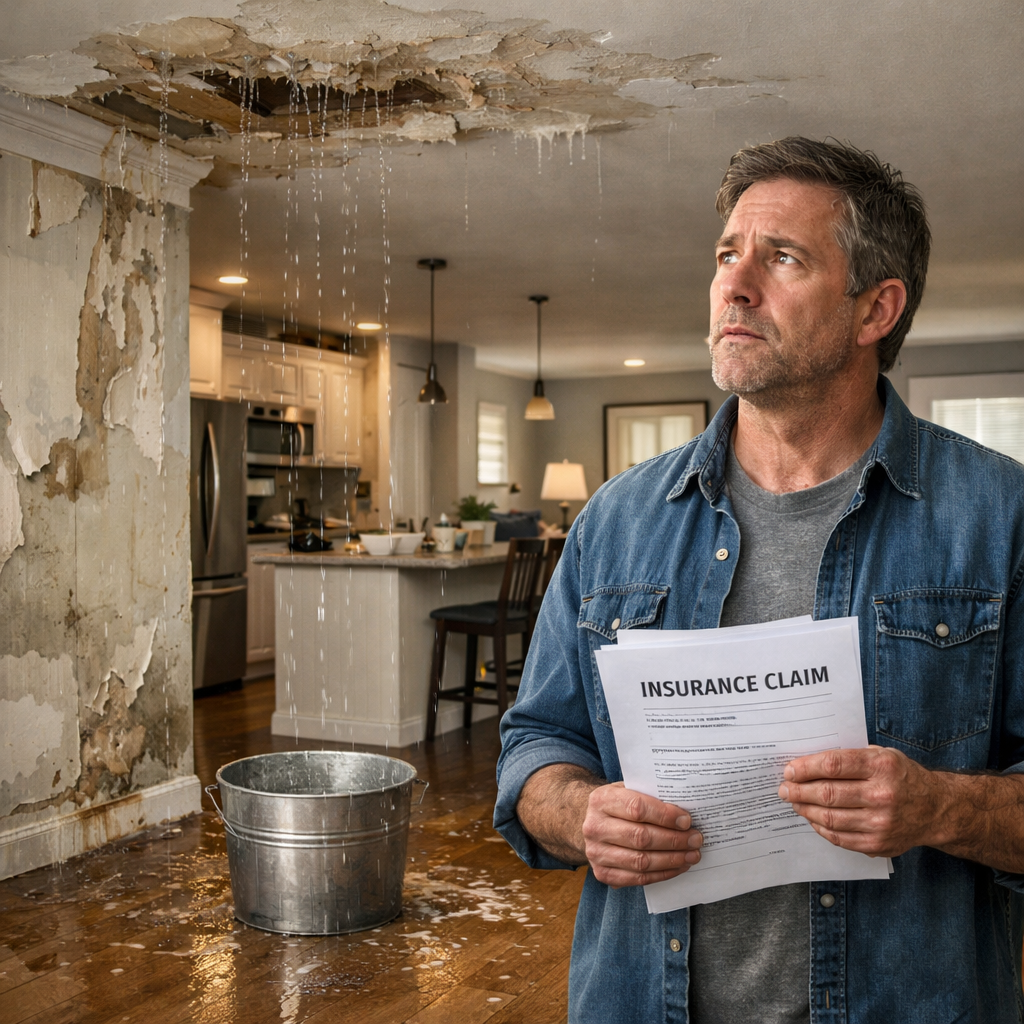
Does homeowners insurance cover water damage? The answer depends on “How” the water entered your property. Sudden, accidental water damage such as from burst pipes, is covered. But standard homeowner’s insurance does not cover gradual damage resulting from neglect, lack of maintenance or even from flooding. To file a claim, act promptly, document everything and contact your insurance company immediately after water damage. Hiring a restoration service can help you navigate the insurance claims process successfully.
Filing a Water-Damage Claim? Understanding What’s Covered and Tips For Successful Navigation
Do you know that water causes 45% of all interior property damage, surpassing fire and burglary? With more and more homeowners exposed to the risks of water damaging their property, understanding your insurance policy and what’s covered is essential. If you are searching for “Does homeowners insurance cover water damage?”, we have put together some data to help you easily navigate the complex claims process.
| Did you know?Water damage accounts for nearly 24% of all insurance claims and is the second most frequent of all claims. |
Here is your guide to understanding what’s covered and what’s not in case of water damage.
What’s Covered?
- Sudden, accidental water damage resulting from plumbing failures such as pipe bursts is covered by a standard homeowner’s insurance policy.
- Malfunctioning dishwashers, water heaters or washing machines causing leaks, are also covered.
- If the severe storm has broken your windows or damaged your well-maintained roof and resulted in water damage, this is also covered.
| Fast FactApproximately 1 in 60 insured homes has a water damage or freezing property damage claim each year. |
What Type of Water Damage is Not Covered?
- Water damage from slow leaks, resulting from lack of maintenance or neglect on your part, is not covered.
- If heavy rain and floods have wreaked havoc with your property, despite significant damage, a standard homeowner’s policy does not cover it. You will need to update your coverage to meet the criteria for flood damage coverage.
- Water damage from sewer or drain backups requires separate policies to keep you protected in the event of any catastrophe.
| Important factWater damage statistics reveal that one in five pipes has exceeded their lifespan and requires replacement. |
How to Navigate the Claims Process Easily and Successfully?
- Acting fast and promptly is the key to a successful claims process. Stop the source of water to prevent any further damage in the event of a disaster.
- Contact your insurance agent and report the claim immediately to establish the timeline. Delaying the reporting results in failed or reduced claims.
- Document all damage extensively. Take timestamped photos and videos of the damage and the affected belongings to present as proof.
- Make only temporary repairs to prevent further damage. Don’t attempt to fix anything until the insurance adjuster has inspected the damage.
- Contact a water damage restoration company fast to help you in documenting the actual extent of damage.
- Dewelling coverage helps you pay for the repairs if the damage is sudden and accidental.
- If your belongings such as home furniture or electrical appliances, are damaged by covered peril, personal property coverage may help you repair or replace those items. Coverage limits may apply.
- Understanding your policy, covered perils, personal property coverage and deductible is important.
Conclusion
Homeowners insurance can help you pay for repairs if a sudden water heater malfunction has damaged your drywall but damage caused by slow leaks or even floods is not covered. Understanding your policy coverage is important for a successful claims process. A water damage restoration company can help you deal with the documentation and filing of the claims process effectively and perform urgent repairs to prevent further damage.
FAQs
How much water is considered water damage?
1 to 2 inches of water is considered moderate damage, while more than 2 inches of water is considered significant damage, which can cause serious structural deterioration.
Which category of water damage is considered the most dangerous?
Category 3 water is highly contaminated and poses serious health risks to property residents.
How long does it take for mold to grow in the event of home water damage?
Mold can grow in as little as 24 to 48 hours after the water damage strikes. Urgent water removal and remediation can help tackle this menace.